
Yes, you read that correctly.
In my massage practice, I use a Black & Decker WP900 auto buffer on the legs during many sessions.
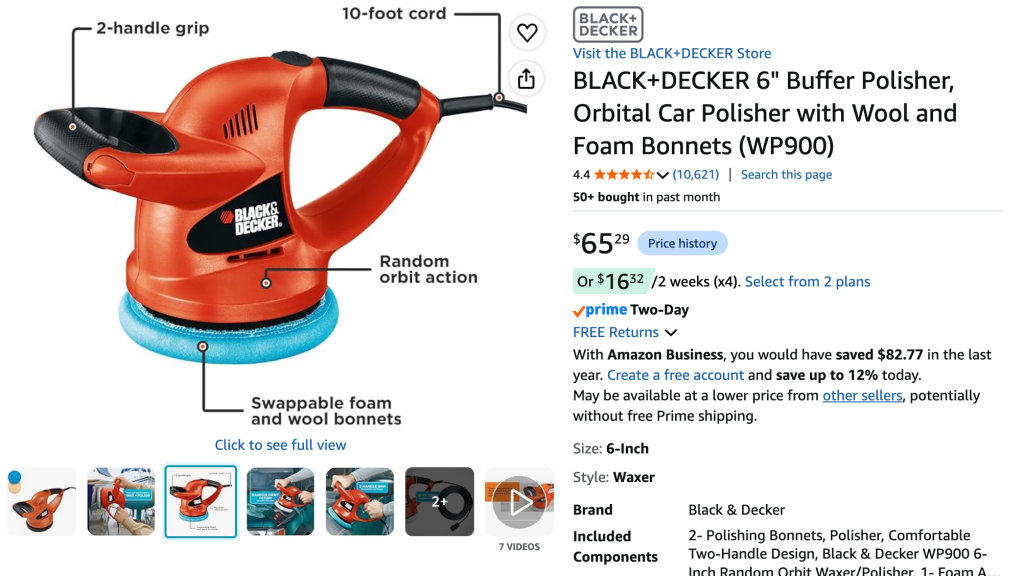
I know that sounds strange at first. Most people hear “auto buffer” and picture a car, not a massage table. Fair enough. But once you understand what the tool is actually doing, it starts to make a lot more sense.
I do not use it because it is quirky. I use it because it works.
The Black & Decker creates a combination of motion, vibration, warmth, and broad mechanical input that the lower body responds to very well. It is not a replacement for skilled hands-on massage. It is one tool I use with intention, alongside neuromuscular therapy, myofascial work, stretching, acupressure, and hands-on assessment.
Used appropriately, it helps prepare the legs and feet for deeper, more effective work without forcing the tissue.
The Motion Creates the Warmth
One of the first things clients notice is the warmth.
That warmth is not coming from a heating element. The Black & Decker is not “heating up” the tissue like a hot pack. The warmth comes from motion.
Most massage guns use a straight in-and-out percussive stroke, repeatedly compressing one point. The Black & Decker works differently. Its random orbital motion moves in a small, non-repeating elliptical pattern, gliding across a broader area instead of hammering into one spot.
That motion creates steady friction over the legs, which produces warmth at the surface. At the same time, the vibration and broad pressure encourage local circulation underneath. In plain language, the tool moves the tissue, wakes up blood flow, and creates heat through motion.
That matters because muscle and fascia respond to more than pressure. They respond to rhythm, direction, warmth, circulation, stretch, and neurological input.
Fascia is living connective tissue with a fluid, gel-like quality. When it is cold, irritated, dehydrated, or guarded, it can feel dense and sticky. When it receives the right kind of warmth and mechanical movement, it can become more mobile. The scientific term often used here is thixotropy, which describes how certain gel-like materials become more fluid when stirred, warmed, or mechanically agitated.
In the body, that means the right combination of movement, friction, vibration, and circulation can help tissue soften and become more pliable. When tissue softens and muscle layers glide more easily, deeper hands-on work becomes easier to receive without me needing to push harder.
That is a big part of how I work at Whidbey Massage Therapy. I am not trying to overpower the body. I am trying to change the tissue environment so the body is more willing to release.
The Nervous System Is Part of the Treatment
Massage is not just about muscle.
Muscle is controlled by the nervous system, and the nervous system is constantly paying attention to pressure, vibration, stretch, movement, and sensation.
When steady vibration is applied to muscle and tendon tissue, it can influence muscle tone, proprioception, and reflex activity. One known response is called the Tonic Vibratory Reflex, or TVR. That sounds technical, but the idea is simple: vibration gives the nervous system a clear and consistent signal.
The Black & Decker WP900 runs at about 4,400 orbits per minute, which works out to roughly 73 Hz. That falls within the general frequency range often discussed in vibration therapy research for neuromuscular response.
That does not mean the tool magically fixes everything. It means it gives the body useful input. For many clients, the tissue becomes less guarded, circulation improves, and the body becomes more receptive to the rest of the session.
That is one of the things I care about most in my work. I am not just working on the muscle. I am working with the nervous system that controls the muscle.
Why I Focus on the Legs and Feet
The lower body is where this tool really shines.
The feet, calves, hamstrings, quads, and hips are all part of the same functional chain. They affect how we stand, walk, balance, brace, compensate, and move through the world. When the legs are tight or guarded, the hips and low back often end up doing extra work.
The feet are especially important because they are loaded with sensory nerves and play a major role in balance and lower-body organization. When the feet relax, the calves, hamstrings, hips, and low back often follow.
That is why I use the auto buffer so often on the legs and feet. It gives me a fast, broad, consistent way to warm the tissue, reduce guarding, improve glide between layers, and prepare the body for more specific hands-on work.
The goal is not more pain. The goal is better results.
Unconventional? Yes. Clinically Useful? Absolutely.
Black & Decker does not market the WP900 as a massage tool. It is sold as an auto buffer, and I want to be clear about that.
In my practice, I use it carefully and professionally. I do not use it over fragile tissue, acute injuries, bony areas, varicose veins, inflamed tissue, or anywhere it does not belong. Like any therapeutic tool, the value depends on how and why it is being used.
But the reason I keep using it is simple: the results are consistent.
The tissue warms. The legs soften. The nervous system settles. Clients often feel their lower body relax more quickly. And once that happens, the rest of the massage becomes more effective.
At Whidbey Massage Therapy, my work is not about chasing pain or forcing release. It is about helping the body feel safe enough to change.
Sometimes that comes from hands-on pressure. Sometimes it comes from stretching. Sometimes it comes from slow fascial work. Sometimes it comes from acupressure and nervous system work.
And sometimes, yes, it comes from a Black & Decker auto buffer.
Subscribe to our Mailing List for specials and Offers from Whidbey Massage Therapy!

What does relaxation
look like to you?
main line: (360) 217-9300
fax: 206-900-8439
cell: 720-614-9847
AMTA - Certificate of Insurance
Home Studio incall, outcall at your location or at
Dr. Eli Bentabou Chiropractic & Wellness
1705 Main Street, Freeland, Wa 98249